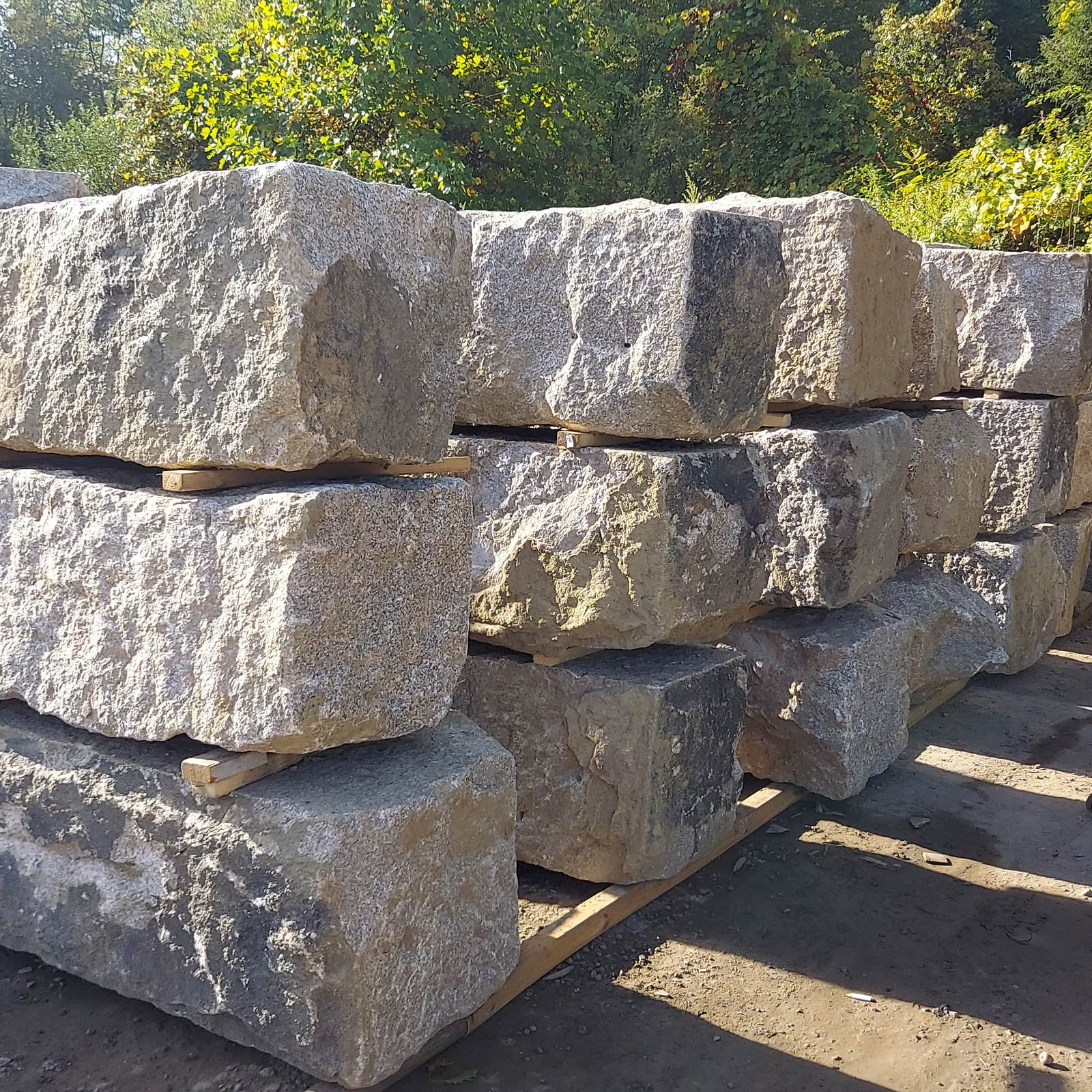
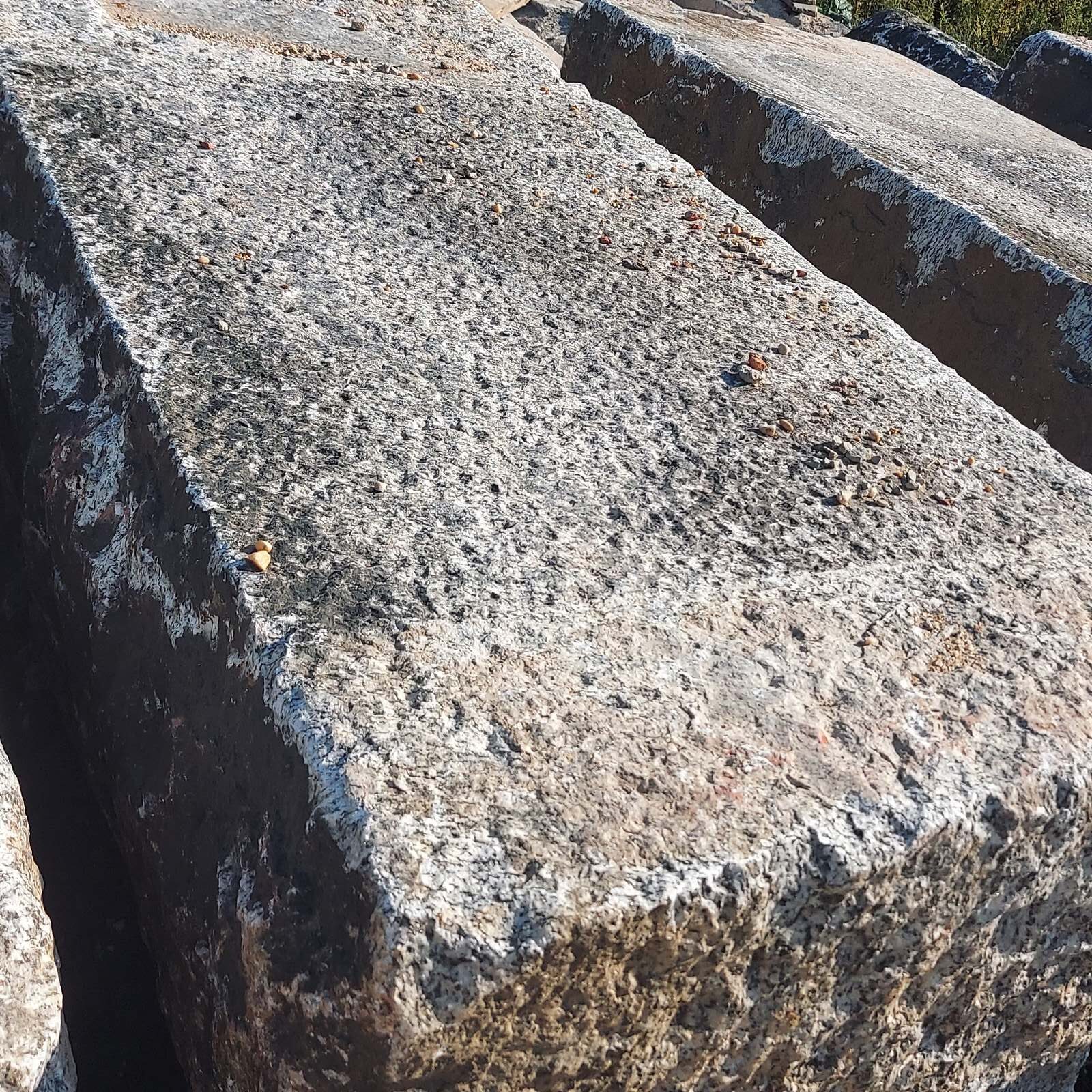
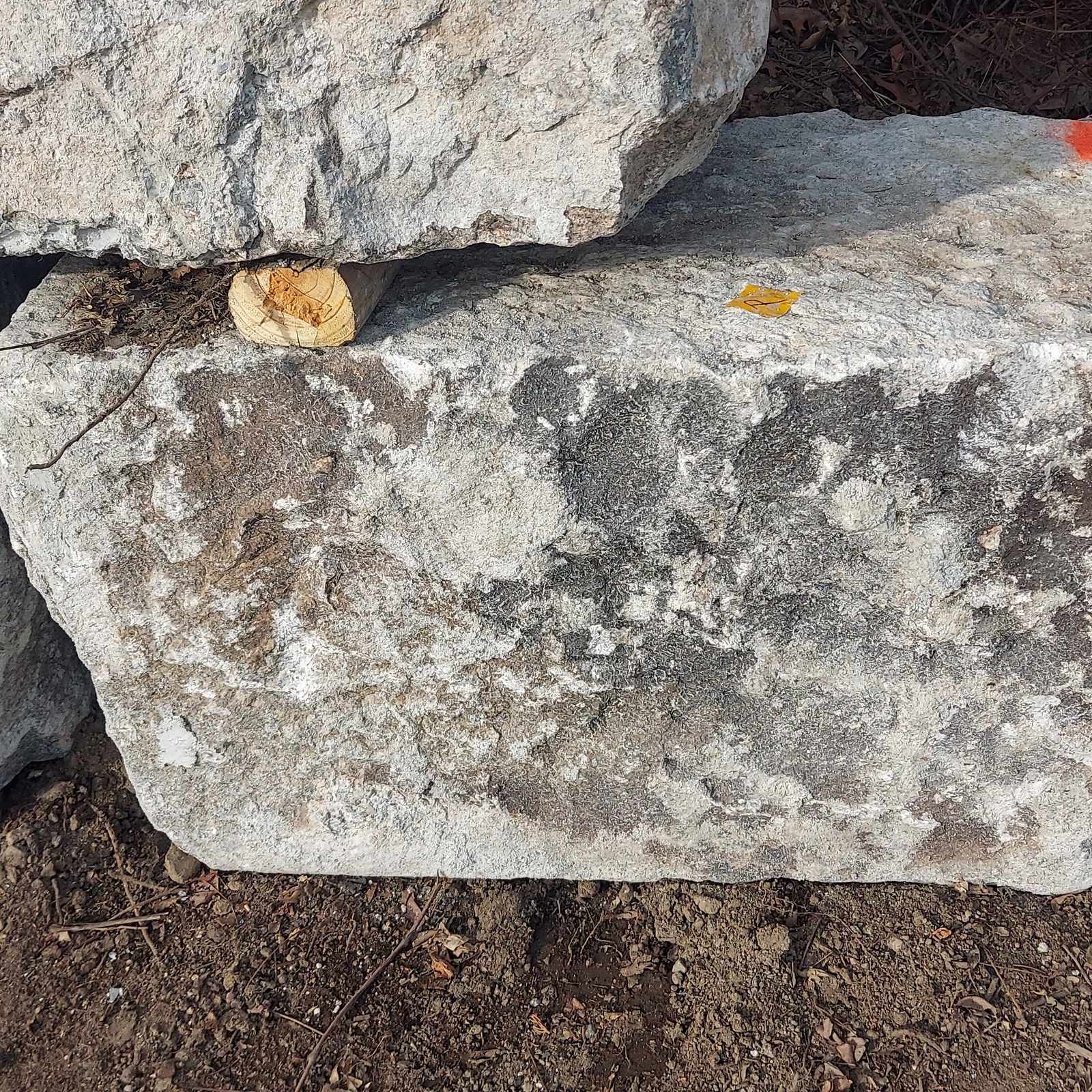
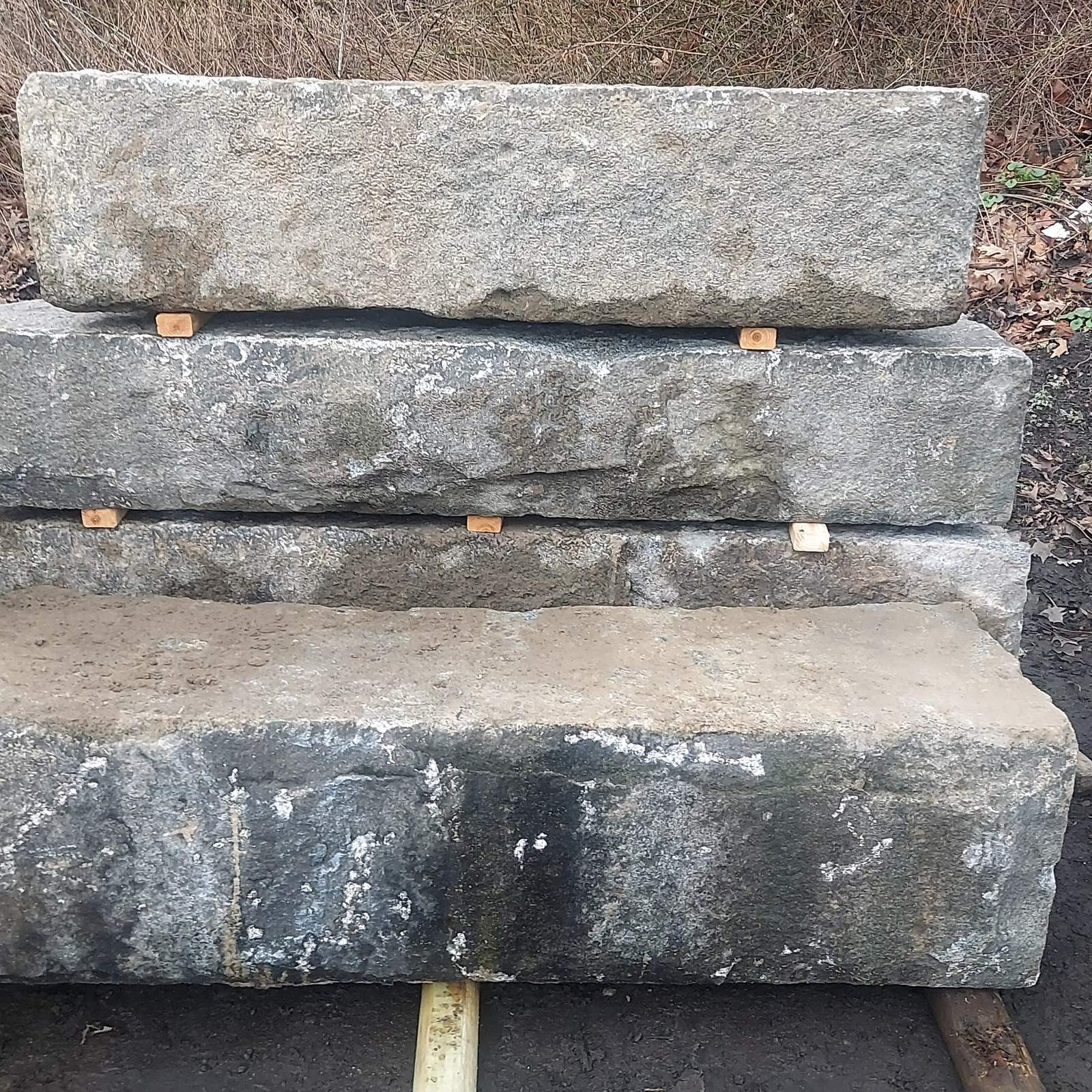
Hammering large pieces of native granite into building blocks has been a part of New England’s history for hundreds of years. These blocks were used for railroad trestles, bridge piers, foundations and the walls of iconic buildings across America. As these structures are retired from service, Stone Farm reclaims their beautiful stone wall blocks so new chapters may be added to their remarkable stories.
• To help match our stone wall blocks to our customers’ needs, we sort our material into three distinct grades: Dimensional, Semi-dimensional, and Bench.
• While we occasionally reclaim other types of blocks such as brownstone and sandstone, it’s most often granite that requires grading.
• Each grade tends to be most appropriate for particular projects, but there are grey areas. Think of these grades as guidelines more than absolutes…
• One side usually displays a nice pillowed wall face.
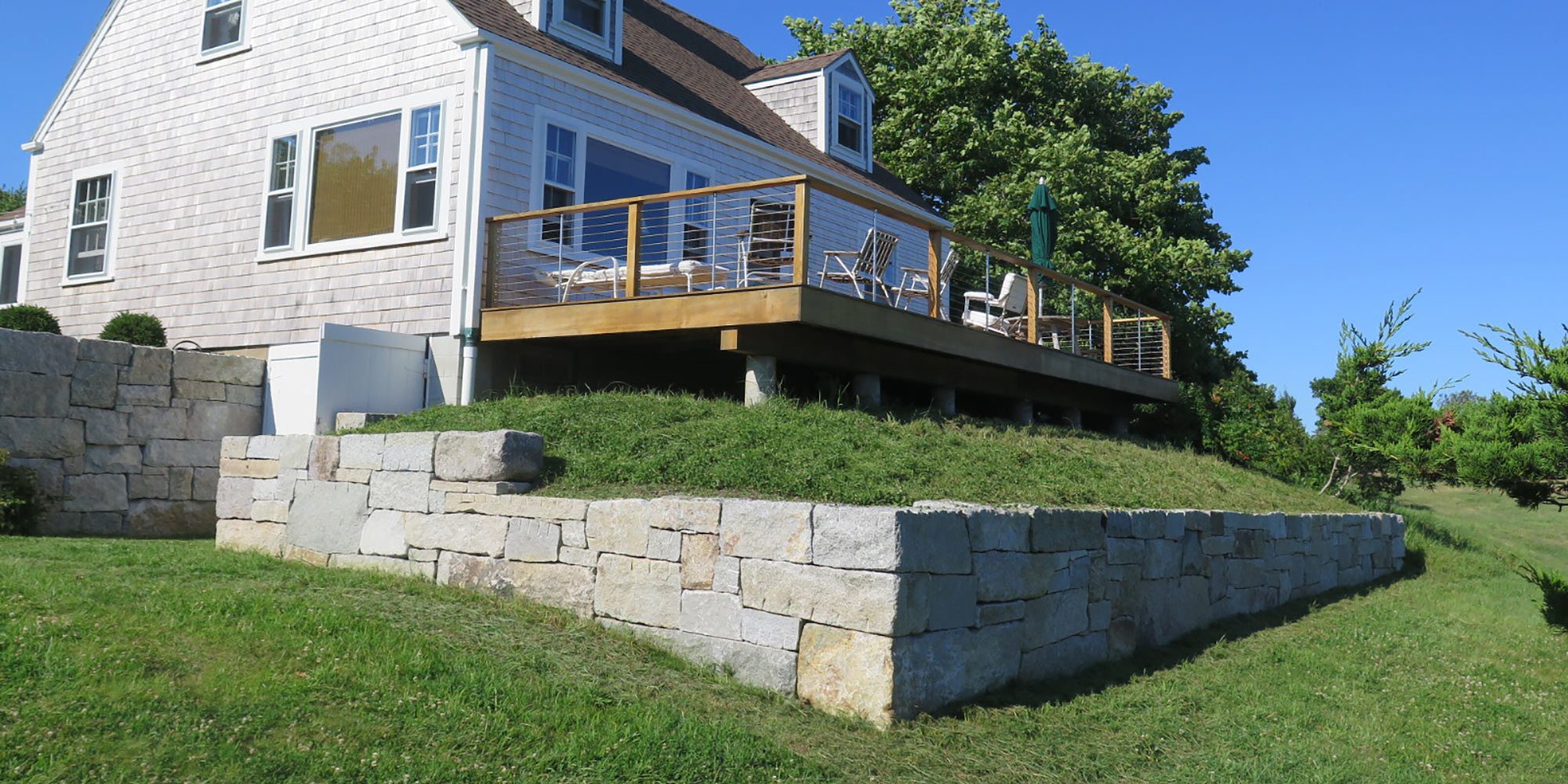
• Common uses: walls and landscape features where front and back are visible, or where conditions can’t accommodate irregular shapes, even if hidden.
Dimensions
Approx. 18-24″H x 18-24″D x 2-8’L
Colors
Shades of grey, blended with earth tones; unique patinas
Texture
Sides range from slightly rough to weathered and naturally-worn to finished faces worked by masons.
SEMI-DIMENSIONAL
STONE WALL BLOCK
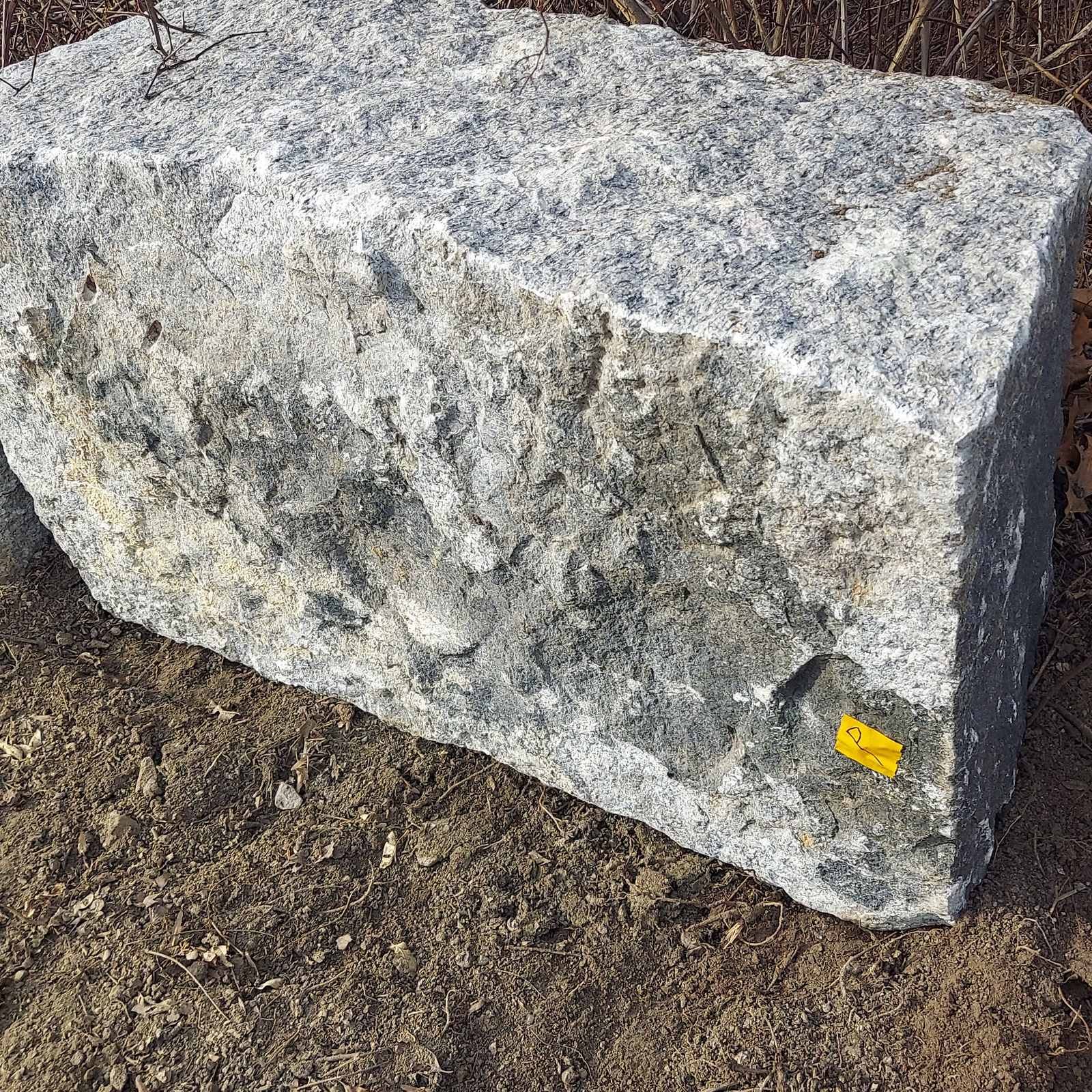
• Blocks with at least 3 square or rectangular, flat faces.
• One side usually displays a nice pillowed wall face.
• Common uses: Accent stones, retaining and landscape walls where an irregular-shaped side can be buried below grade (sloped terrain) or otherwise be hidden from view.
Dimensions
Approx. 18-24″H x 18-24″D x 2-6’L, with at least 1 irregular shaped side.
Colors
Shades of grey, blended with earth tones; unique patinas
Texture
Sides range from slightly rough to weathered and naturally-worn to finished faces worked by masons.
BENCH Grade
Granite BLOCKS
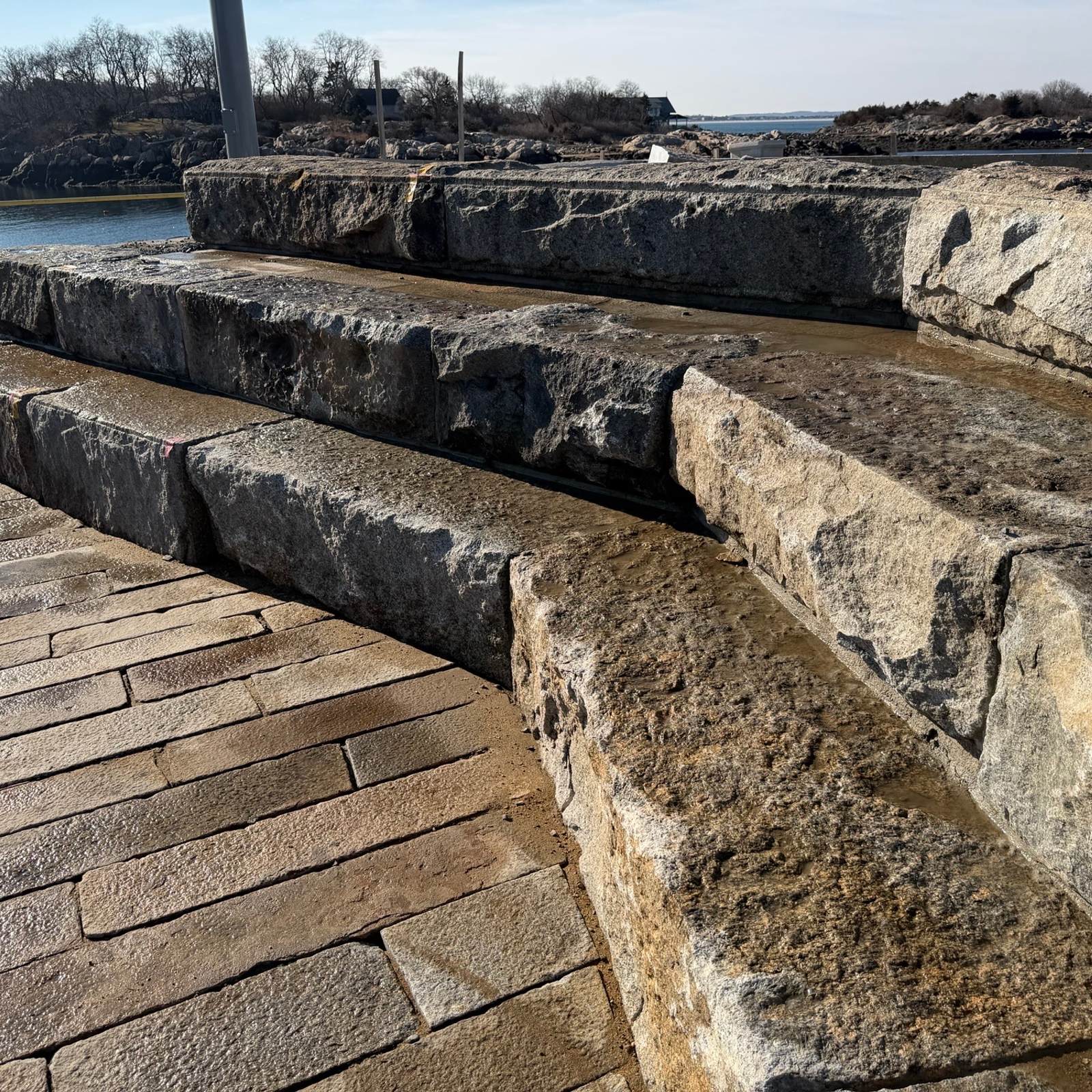
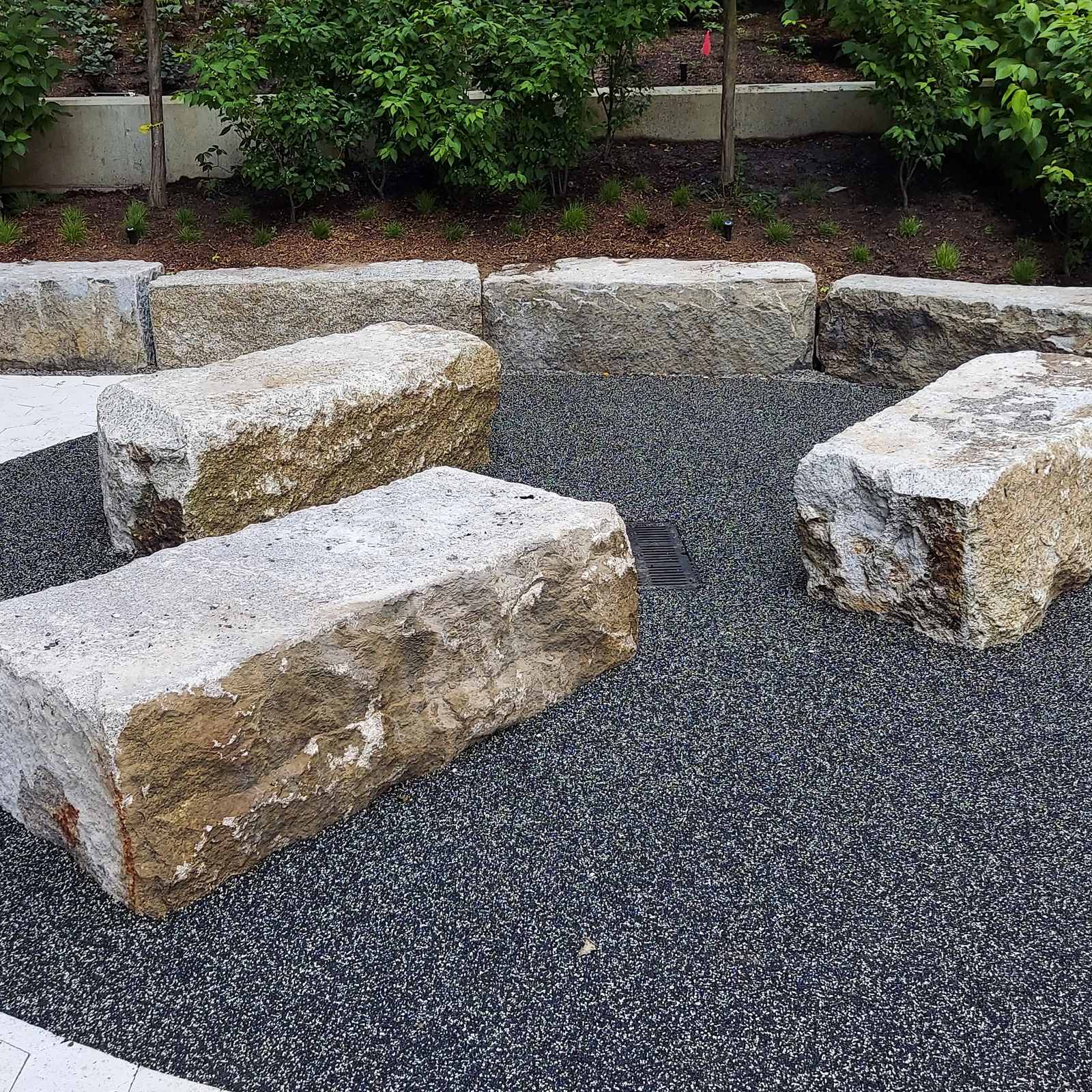
• Blocks with ideal seating heights and worn, flat tops make perfect benches.
• Finished wall faces and rich patinas add character to these formidable, functional stone blocks.
• Common uses: amphitheaters, outdoor classrooms, firepit seating, park benches.
Dimensions
Approx. 15-20″H x 18-24″D x 2-6’L
Colors
Various shades of grey, blended with earth tones; unique patinas
RECLAIMED STONE WALL BLOCK VS. NEWLY FABRICATED STONE
Large format blocks cut from granite, brownstone and sandstone salvaged from old structures provide benefits newly quarried stones simply can’t match.
• Patinas and color variations develop over time, adding unique character to each block.
• Softened, worn edges, corners and faces make for more comfortable and inviting seating areas.
• The emissions produced by quarrying new stone, pulverizing old stone, and hauling both are eliminated by repurposing stone wall bocks.
• Many of these blocks are salvaged from historic buildings, bridges, and trestles. Reusing them not only preserves history, it incorporates history into your home.
We used Stone Farm for reclaimed granite paving. Their material is unique and of high quality. They were super helpful and easy to communicate with. Thanks guys!
read moreread less
Angelika Andz Malachowski
5/22/2024
A little over a year ago my husband and I completed a foyer/powder room flooring project using New England Mill Blend from Stone Farm Living. We LOVE the results. Nick was our contact person at Stone Farm and was very personable and helpful. We will definitely consider ordering from them in the future!
read moreread less
Pam Painter
4/15/2021
Steve is passionate about these extraordinary reclaimed pavers, granite and bluestone Best experience in a long time...fire pits and grills were and unexpected bonus
read moreread less
Marc Chaikin
4/04/2021
Customer service was quick to answer any questions and get me prompt quotes. Material came well packaged in a timely manner. Definitely a great experience for our basement thin brick project.
read moreread less
Elizabeth Jenkins
2/19/2020
We used the New England Mill Blend on walls and floors in our new build and couldn't be happier. The samples sent were enough to help us make the decision - then we had to convince the builder and brick layer that that's what we really wanted. They had concerns that the brick wouldn't hold up to foot traffic, but we've been in the house 15 months and the floor is great! LOVE your product.
read moreread less
Sally Rosenlund
1/07/2020
Great working with Stone farm and Nick. We remodeled our bathroom with the brick veneer and it turned out looking great.
read moreread less
Mark Jackson
1/03/2020
We ordered the thin brick veneer from Stone Farm for our kitchen backsplash. I worked with Nick, who was very professional and friendly. The shipment arrived quickly and was packaged very well. Overall a great experience and high-quality product! Would highly recommend this company!
read moreread less
Amber Thibodaux Burford
12/12/2019
These people are amazing, they truly wants to help you. I have visited a few times and they are a great bunch. They have a great array of great products
read moreread less
Ahmad Noori
11/01/2019
We ordered thin brick veneer from Stone Farms and had it shipped to our house. We were very impressed with the product and the end result. I have no doubt that the brick will pay for itself easily when we resell the house. Completely transformed our living room. Good company with great product!
read moreread less
dcroxby
5/02/2019
The brick products are beautiful and look great. Company was so easy to work with and knowledgeable. Delivery was on time and in tact. Very professional.
read moreread less
Nicholas Paul
3/12/2019
I own an antique home and wanted to build a pathway for my front yard that matched the look. Stone Farm found awesome antique stones for this project and for other parts of the property.
read moreread less
Joni Besse
1/03/2019
We love the grey thin brick veneer we purchased from Stonefarm Living for our new office space. The walls were yellow painted sheetrock and we wanted something more contemporary, artistic, and striking. Everyone who has entered our office is seriously impressed. It is unexpected. We love the grey color as well it is modern and perfect!! We also like how each piece is unique and so there is a lot of texture to the walls they are not uniform so it creates interest. Easy pickup and ordering process as well.
read moreread less
Jennifer DeRosa
12/31/2018
We ordered Stone Farm reclaimed thin brick veneer for two areas in our home remodel project. It was used as the backsplash under a custom reclaimed wood range hood, and we used it to cover the entire wall supporting our wine bar. Our home is filled with rustic history, and this just added to the charm - so much more meaningful than brick façade. Our wine bar wall looks like a full brick wall that has always been there. In addition, the customer service we received was top notch. Our brick had to be shipped all the way across the states, and when it arrived, many of the corner pieces had broken in transit. I reported this to Stone Farm, and received immediate assistance from Nick, who made it a personal mission to make sure we received the needed amount of brick by the deadline we had with our contractor. We felt that Nick was as concerned about our remodel as we were! Not only does the end result look good - it feels good. Thank you!
read moreread less
Sheri Carney
12/30/2018
Everyone at Stone Farm has been a pleasure to work with. I'm very happy with my new outdoor kitchen.
read moreread less
Joe Chenoweth
7/09/2018
I used Stone Farm's reclaimed brick veneer product for a small project in my baby's nursery. Overall I was impressed with the fact that the product looked so authentic I almost tricked myself into thinking it was original to our home. I was so blown away by the overall look that I decided to take a big plunge and brick an entire wall in my remodeled master bathroom.. The service from the Stone Farm team was excellent and a smooth ordering process. I can't wait to show the results of my latest project soon.
read moreread less
Caitlin Hogan
5/08/2018
Fequently Asked Questions
FAQS
ARE RECLAIMED STONE WALL BLOCKS DURABLE?
Cut from dense stones such as granite and sandstone, these blocks were made for structural applications. They’ve already survived many decades in their original settings, and can continue to when properly installed.
WHAT FACTORS SHOULD I CONSIDER WHEN INSTALLING A RETAINING WALL?
Stone Choice – Understanding your space and determining which stones will go where, will save time, effort and energy as your project progresses.
Grading – Factoring the slope and leveling when necessarywill mitigate the potential for issues such as settling, drainage and runoff.
Property lines, permits, and zoning laws – be proactive in checking boundaries, consulting neighbors, and confirming local ordinances and rules. These things are heavy! You don’t want to move them twice…
SHOULD I DRY-STACK MY STONE WALL BLOCKS OR USE MORTAR?
There are few factors to consider when choosing to dry-stack or use mortar:
A compact, level base, and blocks with relatively flat tops allow are important for a either method, but especially so for a dry-stack.
Tight, mortared joints are recommended for flood and retaining walls.
Aesthetically, the organic appearance of a dry-stacked wall is often more desirable, though a well-chosen mortar color can blend into your wall seamlessly if applied with care.
Ready to Begin Your Project?
Bring the Timeless Beauty of Reclaimed Stone Wall Blocks Home
Our team can help you select the perfect blocks for retaining walls, seating areas and more. Whether you’re restoring historic character or creating something truly unique, we’ll guide you every step of the way.